This site is protected by reCAPTCHA and the Google Privacy Policy and Terms of Service apply.
Design & Architecture
Maison Margiela Turns Towards Luxury Living
On Palm Jumeirah, the House translates fashion-led design into a limited collection of architect-designed homes.
Words by Laura Cherry in Design & Architecture · Dec 11th, 2025
Maison Margiela has long occupied a singular position within the luxury landscape. Established in Paris in 1988 by Belgian designer Martin Margiela, the House built its reputation on an intellectual resistance to fashion orthodoxy. It rejected overt branding, foregrounded innovative construction rather than fuss, and treated garments as evolving objects shaped by time, wear, and process. Over the decades, this philosophy expanded beyond clothing into new spaces: objects, interiors, and spatial design, creating a visual language rooted in authenticity, material truth, and the subversive exposure of what is usually concealed. The recently announced Maison Margiela Residences in Dubai represents the Maison’s most comprehensive translation of this worldview into lived habitat, extending its aesthetic codes into architecture, interiors, and daily life at scale.
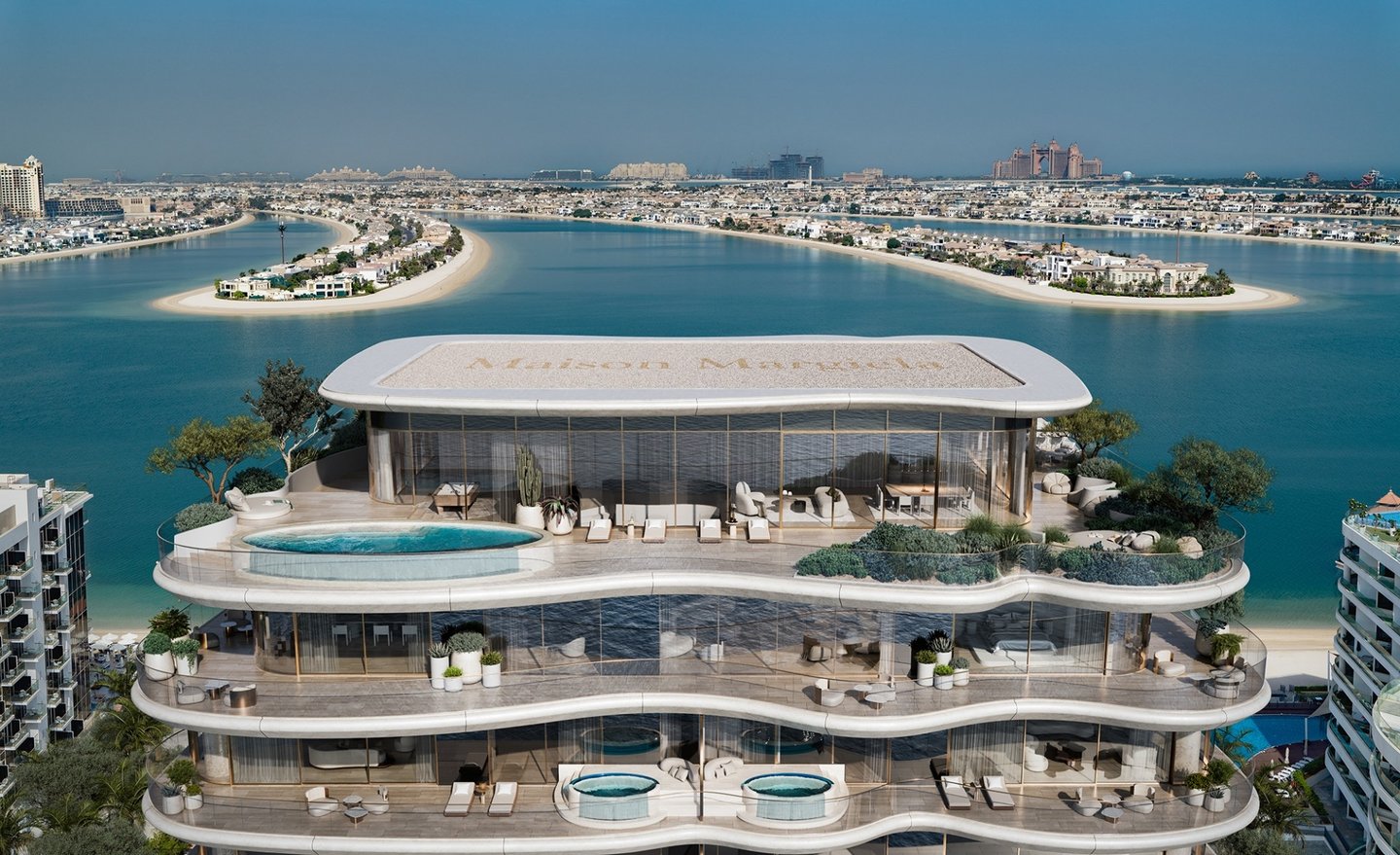
Perched on Palm Jumeirah, which continues to be one of Dubai’s most coveted waterfront locations, Maison Margiela Residences brings together the fashion House’s design language and the ambitions of the city’s branded real estate sector. The project is developed by ALTA Real Estate Development and is deliberately limited to just twenty five residences, a scale that privileges privacy, coherence, and architectural integrity as central principles of the development.
The emergence of fashion houses in the residential sector reflects a broader shift in luxury consumption. The popularity of branded residences suggests a move towards affiliation with experiential identity, offering buyers a lifestyle shaped by a recognisable aesthetic sensibility and quality. What differentiates the Maison Margiela project is the character of the brand. Unlike other maisons associated with pattern or overt glamour, Margiela is known for abstraction, reduction, and critical engagement with form. The transition from clothing to architecture, therefore, reads as a natural continuation of this approach, with the residence becoming another medium through which the House considers the way that materials evolve through use and how daily life contributes to the character of a space.
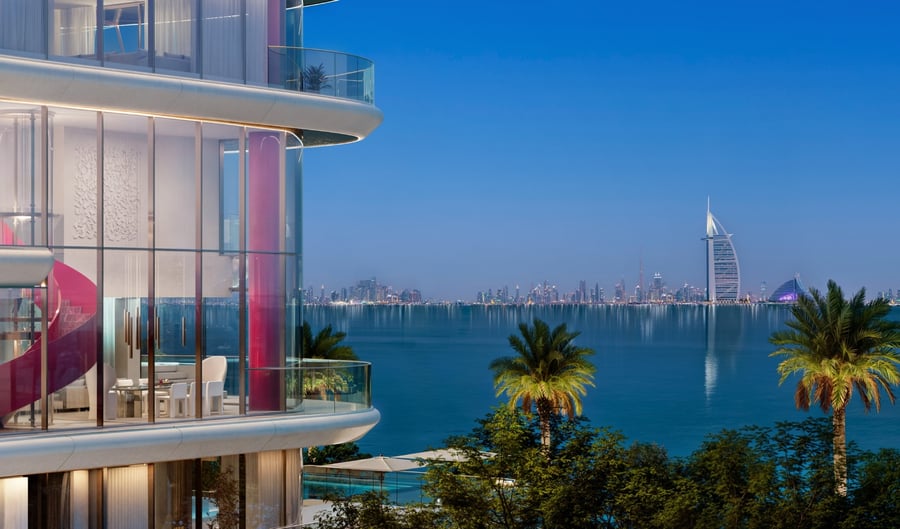
The architectural expression of the building responds to its coastal setting. The structure flows out in layered, curved forms that echo the movement of the shoreline, creating terraces that directly address the sea. Views across the Arabian Gulf and toward Dubai’s skyline are integral to the spatial planning, framing daily life through shifting light and horizon. The project’s situation on Palm Jumeirah places it within minutes of Dubai’s most prominent landmarks and social destinations, yet the building is conceived as inwardly composed, prioritising tranquillity and spatial harmony.
Inside, the residences are shaped by Maison Margiela’s core design principles. Surfaces are stripped back to their essential qualities. Travertine, plaster, brushed metal, marmorino, and weathered mirror form a restrained material palette in which tonal variation and texture carry more weight than colour. The Maison’s signature use of white appears as a spectrum of tonal differences, allowing light and shadow to animate the spaces throughout the day. Architectural details often reveal what would typically remain hidden, drawing attention to structure, joints, and transitions as aesthetic elements rather than disguising them. The treatment of finishes emphasises tactility and depth. Stone surfaces retain subtle irregularities, while plaster walls are deliberately soft in appearance, absorbing light. Metal elements are brushed and muted, contributing to a measured presence. Mirrors are treated as atmospheric devices, sometimes softened or aged, contributing to a layered interior landscape that shifts with movement and occupancy.
Furniture throughout the residences has been designed specifically for the project, creating continuity between architecture and interior. Sofas, tables, beds, lighting, and seating are conceived as part of the building rather than as interchangeable accessories. Forms are sculptural and grounded, favouring organic curves and tactile finishes that invite prolonged engagement. The intention is to allow interiors to age with their occupants, accumulating character over time. Dubai is a city known for fast-paced and transient living, but this is an environment designed for long-term dwelling.
Spatial layouts reinforce this philosophy through clear zoning and generous proportions. Living and dining areas are conceived as fluid spaces that support solitude and gathering. Kitchens are integrated into the architectural language, with sculptural islands and crafted cabinetry that elevate everyday use into an intentional experience. Bedrooms are imagined as grounding retreats, emphasising visual calm and material softness, while dressing rooms are approached as intimate ateliers.
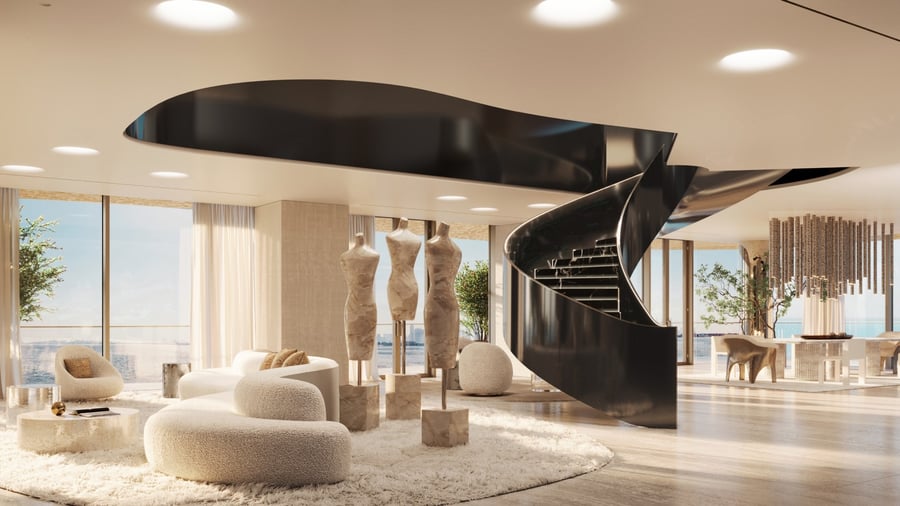
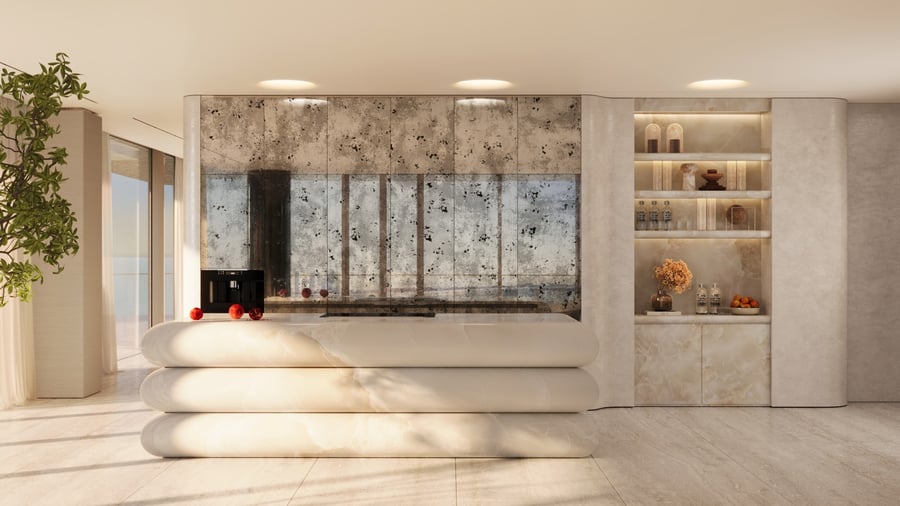
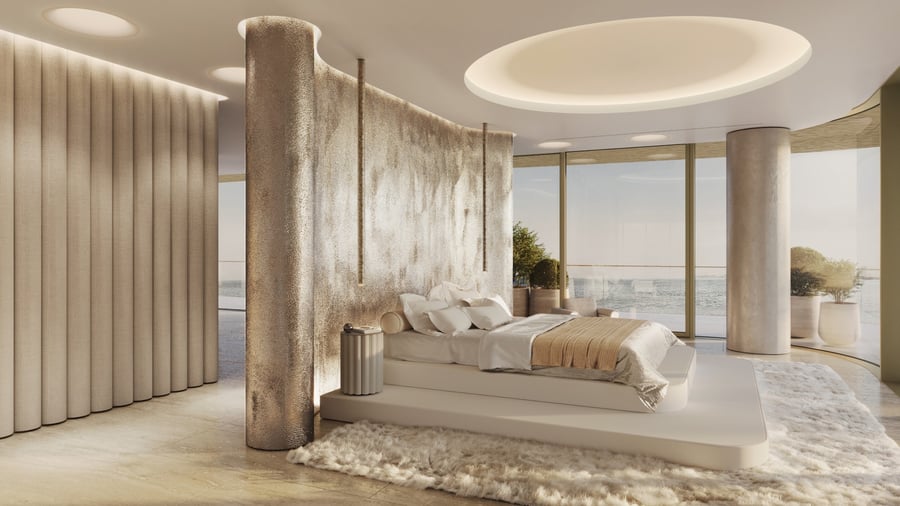
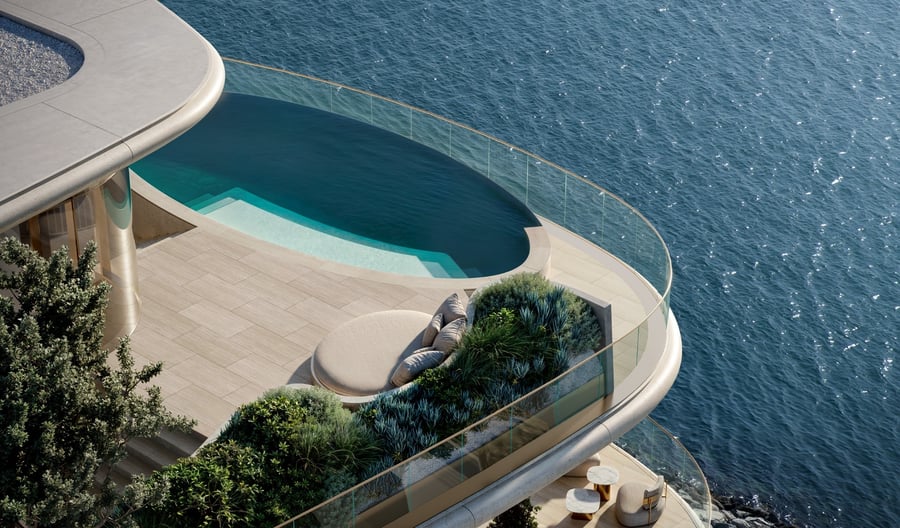
The collection includes two, three, and four bedroom residences, a four bedroom duplex, and a single penthouse named La Maison Blanche. Apartment sizes range from approximately twenty five hundred square feet for the smallest residences to over eighteen thousand eight hundred square feet for the penthouse, which occupies two levels and includes expansive private terraces with uninterrupted sea and skyline views. This uppermost residence incorporates a private pool, outdoor gardens, and multiple entertainment areas, positioning it as a distinct, self-contained environment within the broader development. The scale and configuration of the residences emphasise spatial generosity and adaptability, with layouts designed to accommodate both privacy and hosting. Across all residence types, terraces play an important role. These outdoor spaces are conceived as extensions of the interiors using consistent materials and proportions to blur boundaries between indoors and out. In duplex residences, terraces punctuate both levels, while the penthouse terraces operate as elevated gardens and social platforms, offering layered vantage points across sea and city.
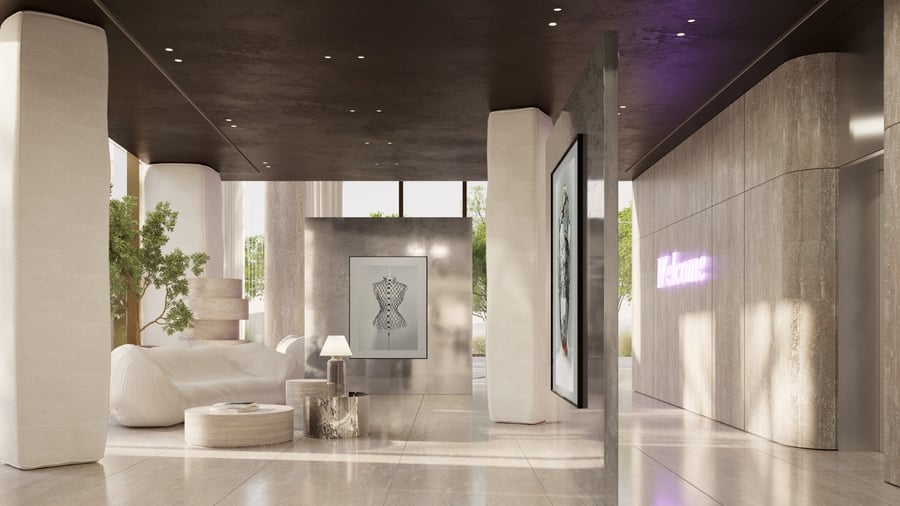
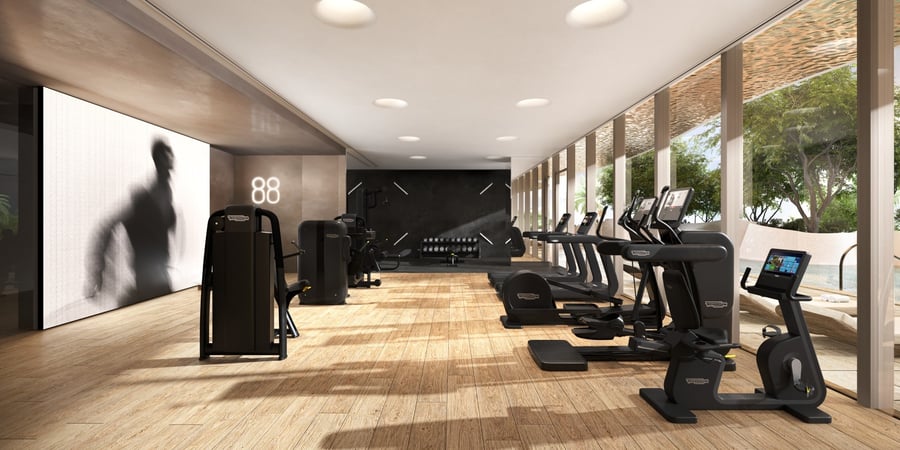
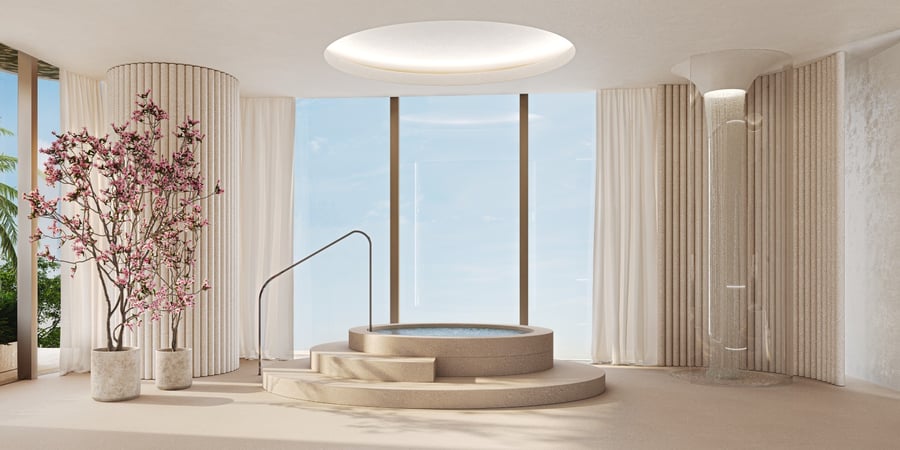
Amenities form extensions of the architectural experience. Residents have access to a private beach, infinity pool, spa, gym, yoga studio, art gallery, curated library, screening room, residents’ lounge, and landscaped outdoor areas integrated into the building’s design. These shared spaces are conceived as quieter social environments, supporting reflection and elevated routine. The art gallery and library function as cultural anchors within the development, offering settings for contemplation and development. Landscape design extends this sensibility outwards, shaping shaded paths, planted terraces, and subtle boundaries between communal and private domains. The development also offers a comprehensive suite of services including twenty four hour doorman and valet, concierge assistance, dedicated on-site management, and optional in-residence services that range from wellness treatments and dining to wardrobe care and event hosting. These services are structured to operate discreetly, reinforcing the emphasis on ease and continuity within daily life. Additional homeowner privileges emphasise the relationship between resident and Maison, offering access to Maison Margiela experiences, personalised services, and curated engagements connected to the brand’s wider creative universe. Such benefits reinforce the residences as part of an elite cultural ecosystem.
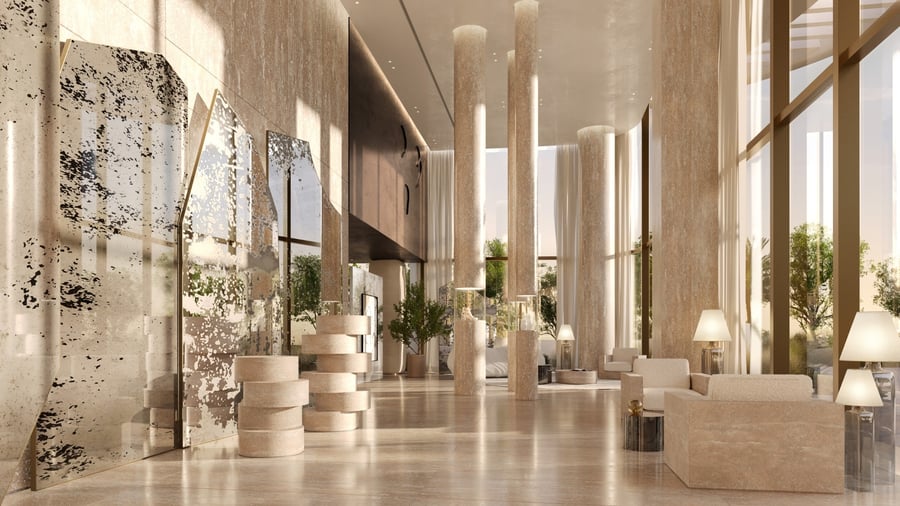
What distinguishes Maison Margiela Residences within Dubai’s growing ultra-luxury property market is the attention to coherence. Every element, from the building’s exterior form to the furniture within individual apartments, follows a unified design logic. The homes are designed to accommodate long-term residence and elevated living rather than transient consumption, aligning with a growing segment of buyers who increasingly perceive their properties as both investment and personal retreat.